
The Invisible Contract
In the world of infrastructure and energy development, we talk a lot about “hard assets”—the steel in the ground, the lithium in the racks, and the copper in the wires. We spend millions on engineering, procurement, and construction (EPC). But as we navigate the complexities of 2026, there is one asset that doesn’t show up on a balance sheet, yet its absence can bankrupt a project faster than a supply chain collapse.
It’s called the Social License to Operate (SLO).
A Social License isn’t something you apply for at a government office. There is no stamp, no filing fee, and no expiration date printed on a document. It is the unwritten, ongoing acceptance of your project by the local community and stakeholders.
In my years consulting on business technology and energy systems, I’ve seen projects with every legal permit in place get mothballed because the developer forgot one thing: You can have the legal right to build, but if you don’t have the community’s permission to exist, you’re standing on quicksand.
The 2026 Reality: Compliance Is No Longer Enough
Five years ago, a developer could largely rely on meeting environmental regulations and zoning requirements to get a project across the finish line. Today, the landscape has shifted. The rise of real-time data, social media activism, and a heightened focus on corporate accountability has made the “Social License” a prerequisite for success.
Why is this happening now?
-
Radical Transparency: Technology has made it impossible to hide. From satellite imagery tracking land use to AI-driven sentiment analysis of local social media, communities know exactly what you’re doing—and how you’re doing it—long before the first bulldozer arrives.
-
The Evolution of ESG: While some have predicted the “end of ESG,” the reality in 2026 is that it has simply matured. Investors are no longer satisfied with vague sustainability claims. They want to see “Social” metrics that prove a project isn’t just green, but also stable and locally supported.
-
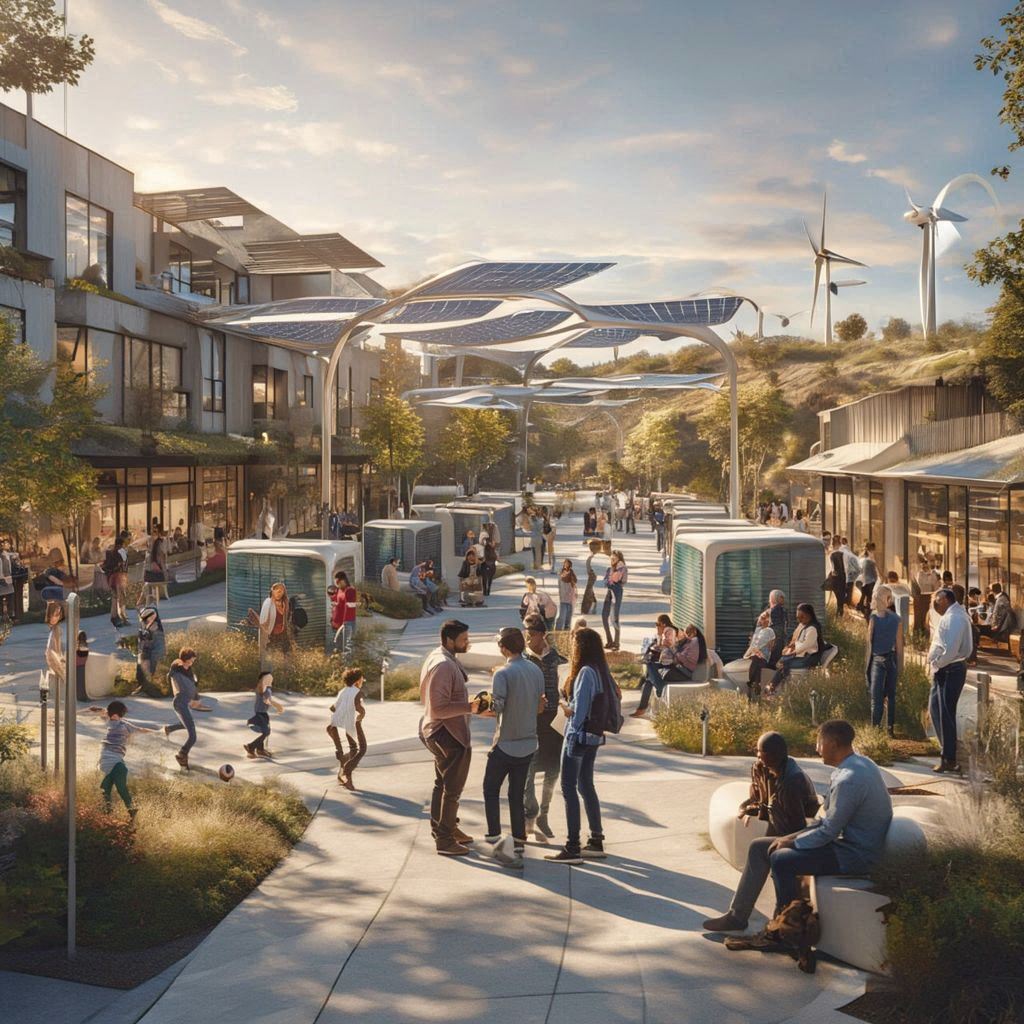
The Interconnected Grid: As we deploy more Distributed Energy Resource Management Systems (DERMS), the line between “utility property” and “community property” blurs. When you are installing microgrids in the middle of a business district or a residential neighborhood, you are moving into someone’s backyard. You have to be a good neighbor.
The Three Pillars of the Social License
Earning an SLO isn’t about a one-time town hall meeting or a glossy brochure. It’s built on three specific pillars that we prioritize at Brevian Energy:
1. Legitimacy (The “Why”)
Does the community believe the project is necessary and that your company is the right one to build it? This is where many C&I developers fail. They focus on the “what” (a 5MW solar array) but forget to explain the “why” (reducing local grid strain and lowering energy costs for the nearby school). To establish legitimacy, you must align your project’s goals with the community’s values.
2. Credibility (The “How”)
This is the “walk the talk” phase. If you promise that your battery storage facility will be silent and screened by native vegetation, it had better be. Credibility is earned through the consistent provision of accurate information and the fulfillment of promises. In 2026, with the sheer volume of available data, any “greenwashing” or technical exaggeration will be caught and called out instantly.
3. Trust (The “Who”)
Trust is the highest level of the Social License. It’s the stage where the community moves from “accepting” the project to “advocating” for it. This only happens through long-term, two-way communication. It means having a point of contact who actually answers the phone when a local business owner has a question about the microgrid’s impact on their operations.
Quantifying the Intangible: The ROI of Trust
I’m a data-driven leader. I know that for many developers and investors, “Social License” sounds like a “soft” concept. So let’s talk about the hard numbers.
A project with a strong Social License sees:
-
Reduced Permitting Times: When the community supports a project, the “public comment” periods of the permitting process move significantly faster.
-
Lower Insurance and Legal Costs: Local opposition is one of the primary drivers of litigation. By investing in SLO upfront, you are effectively buying “reputational insurance.”
-
Higher Operational Resilience: During extreme weather events or grid stress, a community that trusts its local microgrid provider is more likely to cooperate with demand-response programs, making the overall system more efficient.
At Brevian, we integrate SLO metrics directly into our project management software. We track engagement levels, local sentiment, and even the “benefit-to-impact” ratio for every community we enter. We don’t just hope they like us; we make it part of the engineering.
Beyond the Fence Line
As we look toward the next decade of the energy transition, the winners won’t just be the companies with the best battery chemistry or the fastest software. The winners will be the companies that understand that energy is a human service.
If you are a utility executive, a property developer, or a community leader, I challenge you to look at your current portfolio. Do you have the permits? Probably. Do you have the Social License? If you have to think about the answer, you have work to do.
The mission of Brevian Energy is to deliver reliable power everywhere. But “everywhere” includes places where people live, work, and raise families. We won’t succeed in our mission to combat climate change if we leave a trail of resentful communities in our wake.
We lead with equity, we operate with transparency, and we earn our seat at the table every single day. That is the Brevian way.
Is Your Energy Project Socially Resilient?
Building a microgrid is a technical challenge; keeping it running as a valued community asset is a leadership challenge. At Brevian Energy, we provide the consulting and DERMS expertise to help you secure your Social License to Operate.