
The Ship Only Moves if Everyone is on Deck
In the U.S. Navy, we were taught a fundamental truth: a ship is only as resilient as its weakest compartment. If one section of the vessel is taking on water, the entire mission is compromised. It didn’t matter your rank, your background, or where you grew up; when the alarm sounded, every sailor had a role in keeping the ship afloat.
I carry that mindset into the energy sector today. As we sit here in 2026, the “energy transition” is no longer a futuristic concept—it is a full-throttle reality. We’ve seen record-breaking solar deployments and the rapid expansion of battery storage. But as the CEO of Brevian Energy, I have to ask: Who is being left in the dark while the rest of the world plugs into the sun?
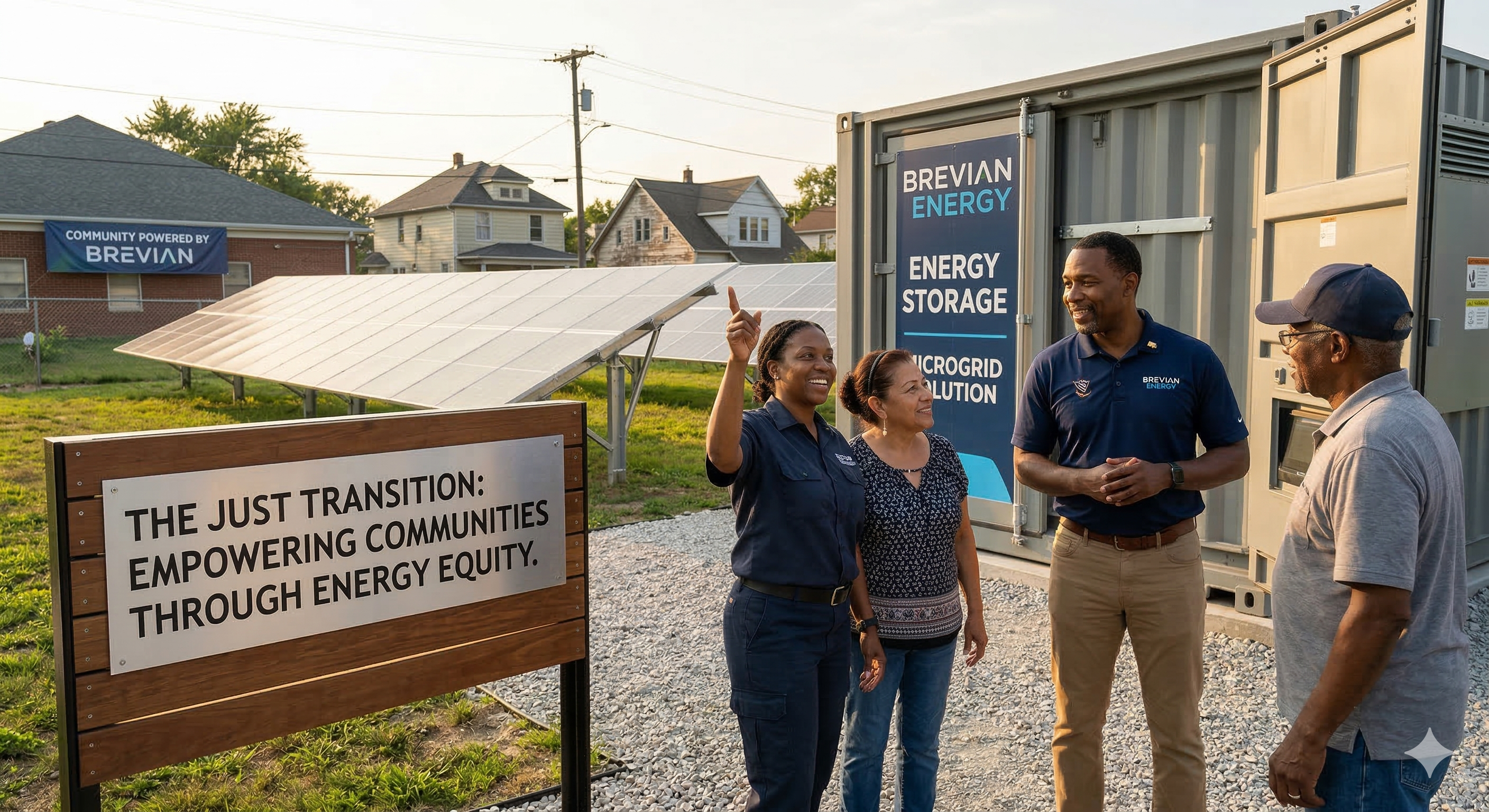
A “Just Transition” isn’t just a buzzword for ESG reports. To me, it’s a strategic imperative. It means ensuring that the move from fossil fuels to clean energy doesn’t replicate the same inequities of the old system. It’s about making sure that rural towns, tribal lands, and urban neighborhoods—communities that have historically shouldered the health burdens of coal and gas plants—are the first to benefit from the resilience and cost-savings of microgrids.
The Cold, Hard Data of Energy Inequity
To understand why we need a Just Transition, we have to look at the numbers. Despite the progress made since the Inflation Reduction Act of 2022, the “energy burden”—the percentage of household income spent on energy bills—remains a stark indicator of inequality.
As of recent 2025-2026 industry reporting, the disparities remain significant:
| Demographic Group | Average Energy Burden (% of Income) | Comparison to National Average |
| White Households | ~2.5% | Baseline |
| Black Households | ~5.4% | 43% Higher |
| Latino Households | ~4.1% | 20% Higher |
| Native American Households | ~6.1% | 45% Higher |
| Low-Income Households | ~8.0% – 12.0% | 3x Higher |
These aren’t just statistics; these are families choosing between keeping the lights on and buying groceries. Furthermore, a 2024 study found that minority communities are still 20% more likely to live near high-pollution “peaker” plants that only operate during periods of high demand.
At Brevian Energy, we view these numbers as a call to action. We aren’t just building hardware; we are building pathways to economic sovereignty.
Microgrids: The Great Equalizer
One of the biggest hurdles to equity is the centralized grid itself. Large utilities often prioritize infrastructure upgrades in high-revenue areas, leaving aging circuits in lower-income or rural districts vulnerable to outages. This is where Microgrids and DERMS (Distributed Energy Resource Management Systems) change the game.
By decentralizing power, we give communities the ability to generate, store, and manage their own energy.
-
Resilience in the Face of Climate Change: Historically, when extreme weather hits, underserved communities are the last to see their power restored. A community-scale microgrid ensures that even if the main grid fails, the local clinic, grocery store, and community center stay powered.
-
Economic Retention: When a rural town installs a solar-plus-storage microgrid, the money spent on energy stays in the community. It’s not being sent to a distant utility headquarters; it’s being reinvested into local maintenance jobs and infrastructure.
-
Price Stability: Fossil fuel prices are volatile. Renewable energy, once the infrastructure is built, has a marginal cost of near zero. For a small business in an enterprise zone, that predictability is the difference between expansion and closure.
Moving Beyond “Check-the-Box” Equity
I’ve been in plenty of boardrooms where “equity” is treated as a compliance task. That is a mistake. True equity requires a fundamental shift in how we finance and develop projects.
At Brevian, we advocate for Power Purchase Agreements (PPAs) that are accessible to non-profits and community organizations that don’t have the tax appetite or upfront capital for massive solar arrays. By leveraging federal “Energy Community” tax credits—specifically those targeting former coal towns and “Justice40” census tracts—we can make the math work for projects that were once deemed “too risky” by traditional investors.
We also have to talk about the workforce. The clean energy sector is expected to add millions of jobs by 2030. However, as of late 2025, the solar workforce remains roughly 70% white. If we want a Just Transition, our industry needs to look like the country it serves. This means intentional recruitment of veterans, who already possess the technical discipline needed for DERMS management, and BIPOC (Black, Indigenous, and People of Color) professionals who understand the unique needs of their own communities.
The Mission Ahead
We are at a crossroads in 2026. We can build a shiny new green economy that looks exactly like the old one, or we can use this technological shift to repair the fractures in our society.
My time in the Navy taught me that you don’t leave anyone behind on the battlefield. The transition to clean energy is our new mission, and the stakes couldn’t be higher. We are fighting for a planet that is habitable, yes, but also for a fair society.
Brevian Energy is committed to this “Just Transition” not because it’s easy, but because it is the only way to ensure long-term grid stability and national security. A resilient grid is a decentralized grid, and a decentralized grid is a democratic one.
What’s Your Community’s Energy Strategy?
Does your local development plan include provisions for energy equity and resilience? Whether you’re a C&I business owner looking to anchor a local grid or a community leader seeking a partner for a rural microgrid project, Brevian Energy is ready to help you navigate the technical and financial landscape.